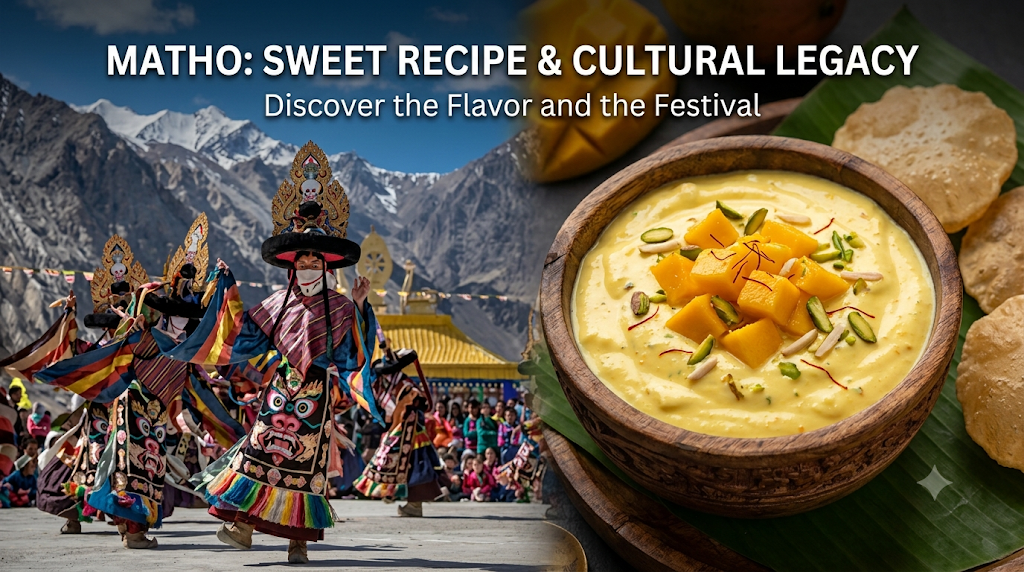
If you have ever spent a warm summer afternoon in Gujarat or attended a festive Indian thali feast, chances are you have encountered a bowl of chilled, velvety matho. Sweet, creamy, and gently spiced, this traditional dessert is an absolute crowd-pleaser. But “Matho” isn’t just a beloved culinary treat—it is also tied to one of the most mysterious and vibrant monastic festivals in the high Himalayas.
Whether you came here searching for a mouthwatering mango matho recipe to cool down your summer or to learn about the sacred Matho Nagrang festival of Ladakh, you are in the right place. Let’s dive into the delicious world of this iconic matho sweet and explore its surprising cultural connections.
What is Matho Sweet?
At its core, matho sweet is a traditional western Indian dessert made from strained yogurt (hung curd), sugar, cardamom, saffron, and a generous mix of chopped nuts or fresh seasonal fruits.
Many people often confuse matho with shrikhand, and while they share similar roots, they aren’t identical:
- Texture: Shrikhand is extremely dense, ultra-thick, and whipped until heavy. Matho is lighter, slightly airier, and smoother.
- Add-ins: Shrikhand relies mostly on dried spices and nuts, whereas authentic matho almost always features fresh fruit chunks, puree, or mixed dry fruits fold into the yogurt base.
It is refreshing, gut-friendly thanks to the probiotic yogurt base, and remarkably simple to prepare at home.
The Fan-Favorite: Easy Mango Matho Recipe
While you can make matho with mixed berries, chiku, or dry fruits, mango matho (often called Aamrakhand in neighboring regions) reigns supreme. The combination of rich Alphonso or Kesar mango pulp with creamy curd is pure magic.
Ingredients You’ll Need
- 3 cups full-fat plain yogurt (or plain Greek yogurt for a faster shortcut)
- 1 cup ripe mango pulp (fresh or canned)
- ½ cup powdered sugar (adjust to sweet taste)
- ½ tsp ground cardamom powder
- A pinch of saffron strands, soaked in 1 tbsp warm milk
- ¼ cup slivered almonds and pistachios
- ½ cup fresh mango, cut into tiny cubes
Step-by-Step Directions
- Strain the Yogurt: Line a colander with cheesecloth or a clean cotton towel. Pour in the plain yogurt, tie the corners tightly, and hang it over a bowl in the refrigerator for 4 to 6 hours (or overnight) to strain out the whey. You will be left with thick, creamy hung curd.
- Blend the Base: In a mixing bowl, combine the hung curd, powdered sugar, saffron milk, and cardamom powder. Whisk gently until the mixture is silky smooth and free of lumps.
- Fold in the Mango: Gently fold in the mango pulp until evenly combined. Then, stir in the fresh mango cubes and half of the chopped nuts.
- Chill & Serve: Transfer the matho to serving bowls, sprinkle the remaining nuts on top, and chill in the fridge for at least 1 hour before serving.
Pro Tip: Serve your cold mango matho alongside hot, puffed-up puris (deep-fried Indian flatbread) for a classic festival meal that balances hot and cold, savory and sweet!
Beyond the Plate: The Matho Nagrang Festival
While foodies know matho as a heavenly bowl of sweet curd, travelers and culture enthusiasts know Matho as a serene village in Ladakh, India, home to the famous Matho Monastery.
Every year, this quiet Himalayan sanctuary comes alive during the Matho Nagrang festival. Held on the 14th and 15th days of the first Tibetan lunar month (usually around late February or March), this two-day event is one of the most fascinating cultural gatherings in the region.
What Makes Matho Nagrang Special?
- The Sacred Oracles: Unlike standard mask-dance festivals, Matho Nagrang is famous for its two monk oracles (Rongtsan). After months of meditation and fasting, two monks enter a deep trance state, channel deities, perform incredible feats blindfolded, and predict the future for the local community.
- Cham Dances: Monks dressed in ornate silk robes and intricate painted masks perform rhythmic, symbolic dances representing the triumph of good over evil.
- Community Spirit: Villagers from all across Ladakh travel through freezing winter conditions to seek blessings, advice, and spiritual protection from the oracles for the coming year.
Frequently Asked Questions (FAQs)
What is matho sweet made of?
Matho sweet is made by whipping strained yogurt (hung curd) with sugar, cardamom, saffron, and fresh fruit pulps or chopped nuts.
Is matho healthy?
Because it is built on a fermented yogurt foundation, matho provides probiotics, calcium, and protein. However, since it contains added sugar, it is best enjoyed in moderation as part of a balanced diet.
Can I use Greek yogurt to make mango matho fast?
Yes! Plain full-fat Greek yogurt is already strained of most whey, so you only need to drain it for 30–45 minutes instead of overnight, cutting your prep time significantly.
When is the Matho Nagrang festival celebrated?
The Matho Nagrang festival is celebrated annually at Matho Monastery in Ladakh during the first month of the Tibetan calendar (typically falling in February or March).
Final Thoughts
Whether you are whipping up a batch of creamy mango matho to brighten up a summer weekend or planning a travel itinerary to witness the mystical Matho Nagrang festival high in the Himalayas, the word Matho carries a rich tapestry of flavor, heritage, and tradition.
Ready to satisfy your sweet tooth? Grab some yogurt and fresh mangoes, try out the simple recipe above, and let us know in the comments how your homemade matho turned out!
Also Visit my Bloggin Website: Inside FlyMeNews: How the Platform Delivers Modern Digital News