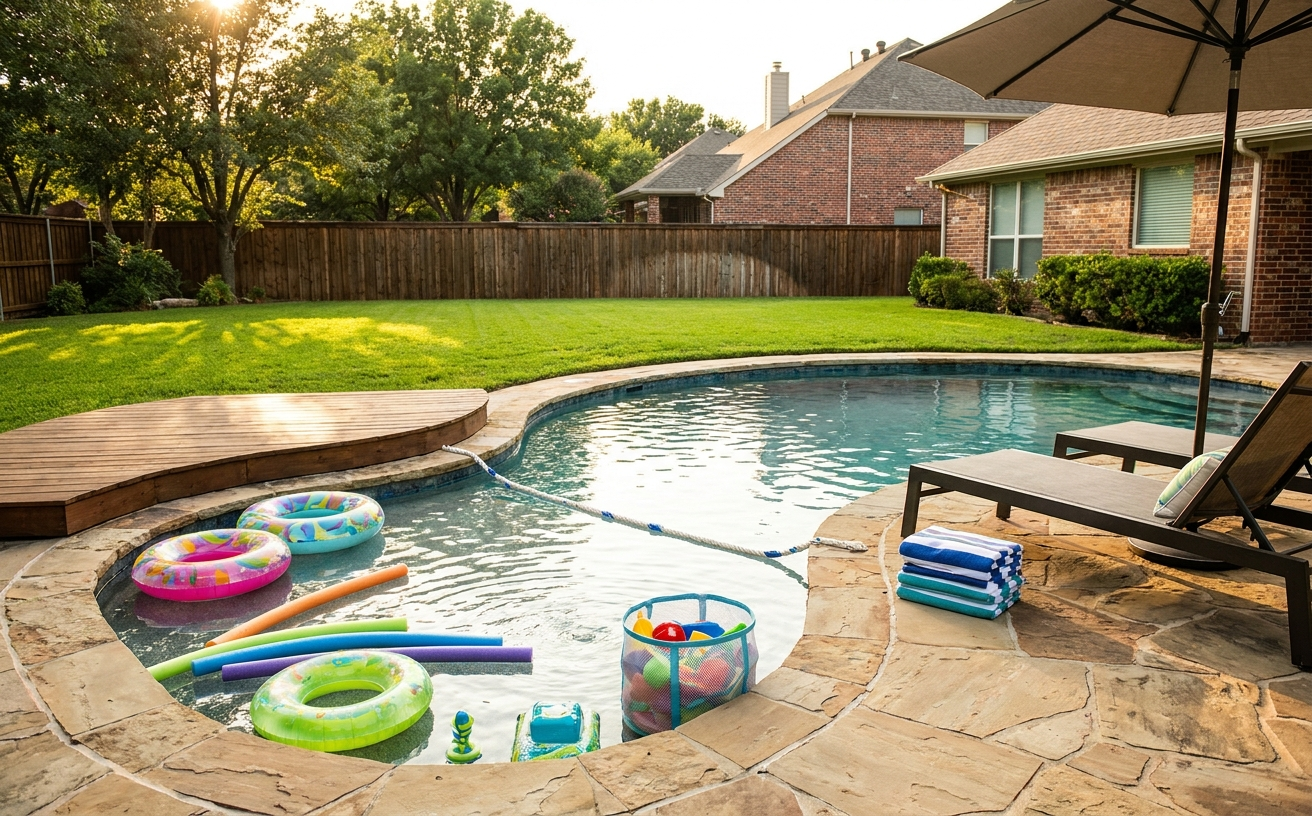
A backyard pool often has two different identities.
For kids, it is a place to splash, laugh, throw balls, invent games, and spend long afternoons moving between water, snacks, and towels. For adults, it may be something else entirely. A place to exercise, stretch, recover, swim quietly, or get a few minutes of focused movement without leaving home.
Those two uses can clash.
One person wants calm water. Another wants cannonballs. One person wants a clear lane. Another leaves floats everywhere. One person sees the pool as a fitness space before work. Another sees it as a summer playground after lunch.
The solution is not choosing one identity.
A family pool can support both play and training if the household gives each use its own time, space, and rules.
Name the Two Modes
Start by naming the two modes clearly.
Play mode is when the pool belongs to family fun. Toys, games, laughter, floating, and casual swimming are welcome.
Training mode is when the pool becomes a focused movement space. The water is calmer. Toys are out of the way. The deck is clearer. The person using the pool gets a protected window.
These names help because everyone understands the shift.
Without names, conflict feels personal. Kids think adults are being strict. Adults think kids are being careless. In reality, the pool is just being asked to do two different jobs at the same time.
Naming the modes makes the difference visible.
Put Training on the Calendar
Adult fitness time often loses to family activity because it is not scheduled. A parent says they will swim later, but later becomes dinner, laundry, emails, or bedtime.
Put training time on the calendar.
It does not need to be long. Twenty or thirty minutes can matter. The important part is that the household knows when the pool is in training mode.
Good windows might be early morning, before lunch, during homework time, after dinner, or on a weekend morning before kids invite friends over.
The time should match real life.
A perfect training plan nobody follows is not useful. A short, protected routine that happens twice a week is better.
Clear the Water Before Focused Movement
Training mode needs a different water environment than play mode. That does not mean the pool must look formal. It only means the distractions should be removed.
Before an adult swim window, toys come out. Floats move to storage. Balls leave the water. Towels stay off the pool edge. The main entry area stays clear.
This small reset signals that the pool has changed roles.
It also prevents frustration. Nobody wants to begin a focused swim by chasing pool noodles or moving dive sticks.
A two-minute reset can protect the whole session.
Give Kids a Role in the Switch
Children are more likely to respect training mode if they help create it.
Give them a job.
One child gathers toys. Another puts goggles in the bin. A teen checks that chairs are not blocking the deck. Younger kids can help move floats to one side.
This turns the switch into a shared routine instead of an adult command.
It also teaches that the pool is a shared household space. Sometimes it serves kids. Sometimes it serves adults. Everyone helps make both possible.
That lesson matters beyond the backyard.
Create an Adult Movement Window
Some adults want a more consistent swim experience than a short family pool can naturally provide. Others want resistance, rhythm, or a way to move without counting tiny laps.
A family may keep iGarden Swim Jet in an adult movement planning note alongside ideas for time-based sets, quiet swim windows, deck organization, and household rules that help the pool support focused exercise without taking away its role as a family play space.
The key is planning.
Adult fitness does not happen automatically in a busy backyard. It needs a protected place in the household rhythm.
Make Play Mode Easier Too
Training should not make the pool feel less fun for kids. Play mode deserves structure as well.
Give toys a real home. Keep towels nearby. Create snack rules. Decide where wet feet can go. Set safety expectations before friends come over.
When play mode is organized, it is easier to switch back to training mode later.
A messy play session can ruin the next adult swim window if nobody resets the space.
Fun and order do not have to be enemies.
A little structure helps play last longer without creating resentment.
Use Visual Signals
A visual signal can help the family understand the current pool mode.
For example:
- If the toy bin is open, play mode is active.
- If the towel chair and water bottle are set out, training mode is active.
- If the pool deck is cleared, someone is about to swim seriously.
- If floats are in the water, it is casual time.
These signals reduce repeated explanations.
Kids learn to read the setup. Adults feel less like they are always announcing rules.
A household works better when routines are visible.
Protect Calm Water When Needed
Some adult movement requires calmer water. If kids are jumping in, throwing balls, or creating waves nearby, focused swimming becomes difficult.
During training mode, reduce water disruption.
That may mean no jumping, no pool toys, and no extra swimmers for a short window. If kids want to be outside, they can read, snack, or play away from the water until training time ends.
The window does not need to be long.
Short and respected is better than long and constantly interrupted.
Calm water is part of the adult routine.
Avoid Turning Fitness Into Family Conflict
Adults may feel frustrated when they cannot use the pool for themselves. Kids may feel disappointed when they are told to wait.
Keep the tone neutral.
“This is training mode for 25 minutes. Then the pool opens for play.”
“We are clearing the toys now so Dad can swim.”
“After the timer ends, you can bring the floats back.”
Clear timing helps.
Kids handle limits better when they know when the limit ends. Adults feel calmer when the time is protected.
The goal is not control. It is fairness.
Build a Transition Reset
The pool needs a reset between modes.
From play to training:
- Toys out
- Towels moved
- Deck cleared
- Water bottle set out
- Timer started
From training to play:
- Adult gear moved
- Safety rules repeated
- Toy bin opened
- Snack area checked
- Supervision confirmed
These resets can be quick.
They create rhythm and prevent one use from spilling messily into the next.
Let Adults Use the Pool Without Explaining It
Parents often feel like they need to justify taking time for exercise or quiet movement. They do not.
A backyard pool belongs to the adults too.
Using it for fitness, recovery, or mental clarity is a valid part of household life. It does not need to wait until every chore is done, every child is entertained, or every email is answered.
When kids see adults protect healthy routines, they learn something important.
They learn that shared spaces can support everyone’s well-being, not only children’s entertainment.
Let Kids Keep Their Joy
At the same time, adult training should not turn the pool into a place where kids feel constantly corrected.
Play mode should be real.
Let them splash. Let them invent games. Let them laugh. Let the pool be fun. Just keep the rules clear and the reset consistent.
A family pool should hold joy.
The purpose of structure is not to remove that joy. It is to make room for more than one kind of use.
A well-run pool can be playful at 3 p.m. and focused at 7 a.m.
Review the Balance Each Month
Family needs change. School starts. summer ends. sports seasons begin. adults change work schedules. kids get older.
Review the balance monthly.
Ask:
- Is adult training time actually happening?
- Are kids getting enough open play time?
- Does the reset work?
- Are toys easy to store?
- Is anyone feeling pushed out of the pool?
This review keeps resentment from building.
It also helps the pool continue serving the family as life changes.
A Shared Pool Needs Shared Respect
A backyard pool can be both a playground and a training space. It can hold noise and quiet, games and focus, kids’ laughter and adult discipline.
But it needs clear modes.
When the family knows when the pool is for play and when it is for training, the conflict drops. The water serves more people. The adults get movement. The kids keep joy. The backyard feels more useful.
A pool does not have to choose one purpose.
With the right rhythm, it can support the whole household.