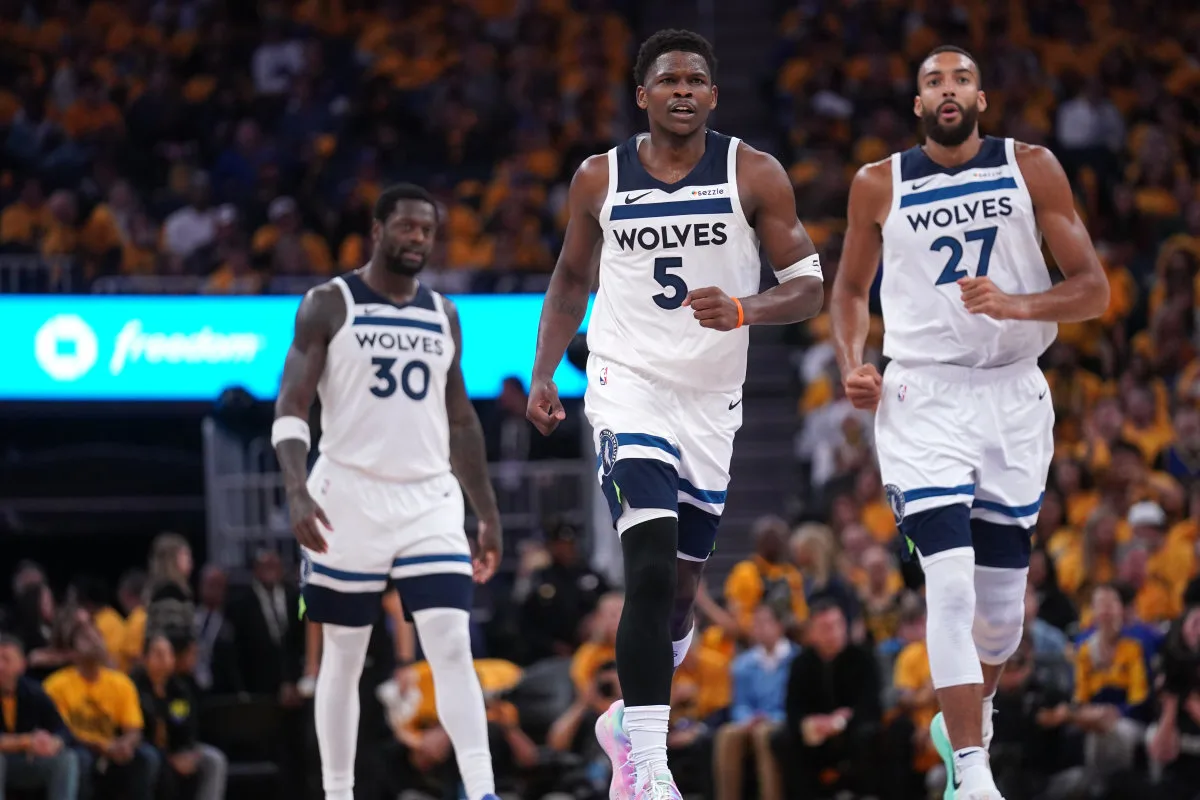
The NBA world stopped when news broke about the most recent Timberwolves trade involving Karl-Anthony Towns. For years, KAT was the face of Minnesota basketball. Seeing him head to the New York Knicks was a shock to many fans. However, the return brought in Julius Randle and Donte DiVincenzo, changing the team’s identity overnight.
This move wasn’t just about talent; it was about balance. The Wolves needed more gritty defenders and playmakers around Anthony Edwards. By adding Randle’s strength and DiVincenzo’s elite shooting, the team became much deeper. It was a bold “all-in” move by Tim Connelly. While losing a superstar hurts, the early results show a team that is much harder to beat in a seven-game playoff series.
Who Joined the Pack? New Faces in Minnesota
Whenever a Timberwolves trade happens, fans immediately want to know who is coming through the door. Recently, the team added Ayo Dosunmu and Julian Phillips from the Chicago Bulls. This trade cost the Wolves some young talent like Rob Dillingham and Leonard Miller, but it provided immediate help for the bench.
Ayo Dosunmu is exactly the type of player coach Chris Finch loves. He is a fast, versatile guard who can defend multiple positions. Adding him to a second unit that already features Sixth Man of the Year favorite Naz Reid makes Minnesota’s bench one of the scariest in the league. These moves show that the front office isn’t afraid to trade “potential” for “production” if it helps them win a title right now.
Why the Timberwolves Trade for Julius Randle Matters
Many critics wondered how Julius Randle would fit next to Rudy Gobert. After all, the “Twin Towers” era with KAT was unique. The Timberwolves trade for Randle brought a different kind of power to the forward position. Randle is a bully-ball specialist who can create his own shot when the offense stalls.
Having a secondary scorer like Randle takes the massive pressure off Anthony Edwards. In the past, if “Ant-Man” had an off night, the Wolves struggled to score. Now, they have a veteran who has been an All-Star and knows how to command double teams. His passing ability from the post has also opened up lanes for Jaden McDaniels and Donte DiVincenzo to thrive.
The Financial Logic Behind the Timberwolves Trade
NBA trades aren’t just about points and rebounds; they are about the “salary cap” and “luxury tax aprons.” The Timberwolves trade moves were heavily influenced by the new CBA rules. Minnesota was staring at a massive tax bill that would have limited their ability to sign players in the future.
By trading KAT’s supermax contract, the Wolves gained more financial flexibility. They managed to stay under the dreaded “second apron,” which allows them to keep making smaller trades and signing veteran free agents. It’s a boring side of basketball, but it’s the reason why the team can afford to keep a deep roster around their expensive stars.
Impact of the Timberwolves Trade on Anthony Edwards
Everything in Minnesota revolves around Anthony Edwards. Every Timberwolves trade is designed to make his life easier. The front office realized that for Edwards to become an MVP, he needed shooters who could space the floor and veterans who wouldn’t crumble in the clutch.
Bringing in championship-experienced players like Donte DiVincenzo has been a game-changer. It allows Edwards to focus on being the primary “closer” while knowing his teammates will hit their open shots. The chemistry is still growing, but the “gravity” these new players provide gives Edwards more room to drive to the rim and highlight the nightly reels.
Timberwolves Trade History: A Rapid Review
To understand where the team is going, we have to look at where they’ve been. The Timberwolves trade for Rudy Gobert a few years ago was the first domino. Many people mocked the trade at the time, but it turned Minnesota into the #1 defense in the NBA.
Rumors and Future Targets: What’s Next?
Even after the deadline, the Timberwolves trade rumors never truly stop. Some analysts believe Minnesota still needs a long-term answer at the point guard spot as Mike Conley nears retirement. Names like Tyus Jones or even a “buy-low” move for a veteran playmaker are often discussed in local sports circles.
The team also keeps an eye on the buyout market. Recently, they brought back “Slo-Mo” Kyle Anderson after he was bought out by Memphis. This shows that the Wolves are always looking for high-IQ players who fit their system. While a massive blockbuster is unlikely this summer, don’t be surprised if more minor moves happen to shore up the wing depth.
How the Fans Reacted to the Latest Trades
Timberwolves fans are a passionate bunch. When a Timberwolves trade happens, the internet usually explodes. The KAT trade was particularly divisive. Some fans felt the team lost its soul, while others were excited for a more balanced roster.
However, winning cures everything. As the Wolves climbed the Western Conference standings, the “Fire Connelly” chants turned into “In Tim We Trust.” Seeing players like DiVincenzo dive for loose balls and Randle power through defenders has won over the Target Center crowd. The fans now see a team that reflects the hard-working spirit of Minnesota.
Coaching the New Pack: Chris Finch’s Challenge
Integrating new players after a Timberwolves trade is no easy task. Coach Chris Finch has had to reinvent his offensive schemes mid-season multiple times. He has moved away from the “Double Big” lineup and into a more modern, versatile style of play.
Finch’s ability to get everyone to “buy in” to their roles is his greatest strength. Whether it’s convincing a star like Naz Reid to come off the bench or helping Julius Randle fit into a ball-movement system, Finch has been the glue. The success of these trades is as much about his coaching as it is about the talent of the players.
Conclusion: Are the Timberwolves Contenders?
The ultimate goal of every Timberwolves trade is a championship parade in Minneapolis. By shifting the roster to be younger, faster, and more defensive-minded, they have built a team that can compete with anyone. They have the superstar in Edwards, the defensive anchor in Gobert, and the depth to survive injuries.
The road through the West is brutal, but the Wolves are no longer the “lovable losers.” They are a powerhouse. Only time will tell if these trades provide the final piece of the puzzle, but for now, the future of basketball in the Twin Cities has never looked brighter.
Frequently Asked Questions (FAQs)
1. Who did the Timberwolves get for Karl-Anthony Towns? In the blockbuster Timberwolves trade, Minnesota received Julius Randle, Donte DiVincenzo, Keita Bates-Diop, and a future first-round draft pick from the New York Knicks.
2. Is Mike Conley still on the team? Yes, though he briefly moved during a deadline shuffle, he returned to provide veteran leadership. His role is vital for guiding the younger guards.
3. Why did they trade Rob Dillingham? The Timberwolves trade involving Dillingham was made to get Ayo Dosunmu. The team felt they needed a veteran who could help them win a championship right now rather than waiting for a rookie to develop.
4. How many trades have the Timberwolves made recently? In the last two years, the team has made several major moves, including the KAT trade and the deadline deal for Ayo Dosunmu and Julian Phillips.
5. Who is the most important player on the roster? While the trades brought in great talent, Anthony Edwards remains the undisputed leader and most important player for the team’s success.