The World Darts Championship is one of the most prestigious events in the sport of darts. Every year, the top players from around the globe compete for the ultimate title, not just for glory, but also for significant prize money. Over the years, the championship has grown in popularity, attracting large audiences and offering some of the highest earnings in the sport. In this article, we will explore the prize money at the World Darts Championship, its history, distribution, notable winners, and the overall impact on the sport.
History of the World Darts Championship
The World Darts Championship has a rich history dating back to the 1970s. Initially organized by the British Darts Organization (BDO), it provided a platform for darts players to showcase their skills on an international level. In 1994, a split in the darts world led to the creation of the Professional Darts Corporation (PDC), which now organizes the modern World Darts Championship.
The championship quickly became a marquee event in the darts calendar. Players compete in a knockout format, progressing through rounds until a champion is crowned. Over the years, the tournament has evolved, not just in terms of competitiveness, but also in the amount of prize money offered.
Growth of Prize Money in Darts
Prize money in darts has seen a remarkable increase over the years. In the early days, the rewards were modest, primarily covering travel and accommodation costs. However, as the sport gained television coverage and sponsorships, the prize pools started to grow substantially.
Today, the World Darts Championship is known for its lucrative prizes. The increase in prize money reflects the professionalization of the sport, making darts a viable career for players who perform consistently at a high level.
Current Prize Money Structure
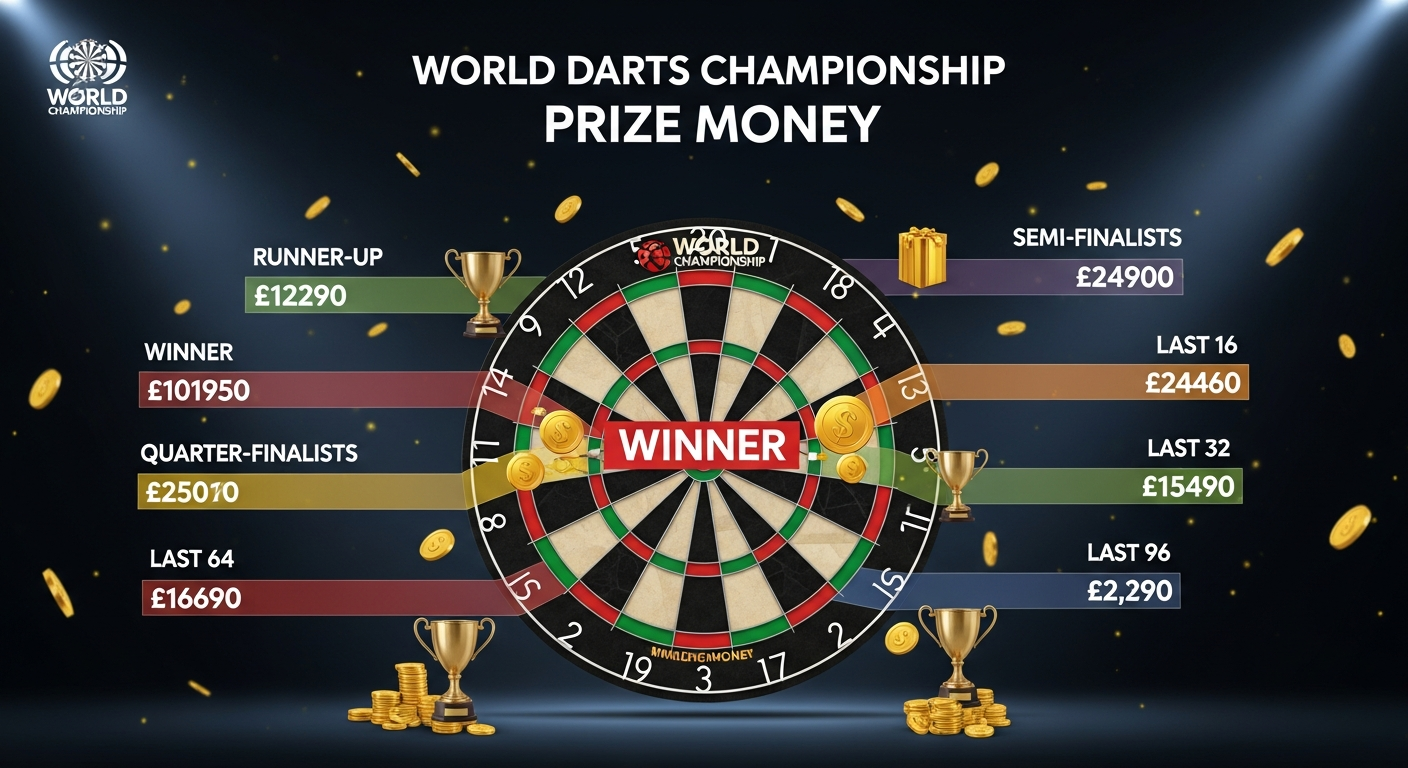
The prize money at the World Darts Championship is tiered based on how far a player progresses in the tournament. The deeper a player goes into the competition, the higher their earnings. Here is a simplified breakdown of the prize distribution:
Prize Money Distribution
- Winner: The champion receives the largest share of the prize pool, often exceeding £500,000. This prize is not only a reward for skill but also a symbol of prestige.
- Runner-Up: The finalist who loses in the championship match earns a substantial amount, usually around half of the winner’s prize.
- Semi-Finalists: Players who reach the semi-finals receive significant earnings, ensuring that top performers are well compensated.
- Quarter-Finalists: Those reaching the quarter-finals also receive a notable sum, reflecting their success in the tournament.
- Last 16: Players who make it to the last 16 earn a respectable prize, providing financial support for continued participation.
- Early Rounds: Even players who exit in the early rounds receive some prize money, acknowledging their achievement in qualifying for the world stage.
The total prize pool has grown to over £2.5 million in recent editions of the PDC World Darts Championship. This substantial sum has helped attract global talent and increased competitiveness in the sport.
Notable Winners and Records
The history of the World Darts Championship is filled with legendary players who have left their mark not just in titles but in prize money earnings. Some of the most notable winners include Phil Taylor, Michael van Gerwen, and Peter Wright.
Phil Taylor, often regarded as the greatest darts player of all time, has won the championship 16 times, accumulating millions in prize money over his career. Michael van Gerwen, a modern-day star, has consistently been among the top earners, reflecting both his skill and the increasing prize pools in recent years.
Impact of Prize Money on the Sport
The increase in prize money has had a transformative effect on darts. It has encouraged players to train more professionally, increased sponsorship opportunities, and elevated the sport’s global profile. With higher stakes, matches have become more competitive, leading to more thrilling encounters for fans.
Prize money has also created opportunities for players from different countries to participate. While darts traditionally had a strong presence in the UK and Europe, larger prizes have incentivized international players to join, diversifying the competition.
Comparison with Other Sports
While darts may not have the same level of global commercial revenue as sports like football or tennis, the prize money at the World Darts Championship is significant within its context. For top players, winning the championship can be as financially rewarding as some professional events in larger sports, especially considering the lower costs of travel and training compared to other professional athletes.
Future of Prize Money in Darts
Looking ahead, prize money in darts is expected to continue growing. With increasing television deals, sponsorship, and fan engagement, the financial rewards for players are likely to rise. There is also a growing trend of offering bonuses for achievements such as a nine-dart finish, adding excitement and extra incentive for players.
As the sport expands globally, the distribution of prize money may become more balanced to encourage participation from emerging darts nations, further enhancing the championship’s reputation.
List of Key Prize Money Highlights
- Record prize for a World Darts Championship winner
- Runner-up earnings and their historical growth
- Highest prize money earned in a single tournament
- Bonus rewards for special achievements
- Growth of total prize pool over decades
- Distribution trends among semi-finalists and quarter-finalists
- International players benefiting from larger prize pools
- Sponsorship influence on prize money
- Comparison with early BDO prize money
- Impact on player career choices and professional training
FAQs
1. How much is the prize money for the winner of the World Darts Championship?
The winner usually receives over £500,000, making it the most lucrative reward in the tournament. The exact amount varies slightly each year.
2. Has the prize money increased over the years?
Yes, prize money has grown significantly from the early days, reflecting the sport’s rising popularity and professionalization.
3. Do players receive money if they lose in the early rounds?
Yes, even players eliminated in the initial rounds receive prize money, which helps cover expenses and rewards their achievement in reaching the world stage.
4. Are there bonuses for special achievements in the championship?
Yes, bonuses are often awarded for feats like a nine-dart finish or record-breaking performances, adding extra incentives for players.
5. How does World Darts Championship prize money compare with other sports?
While not as high as top football or tennis events, the prize money is significant for darts and provides a competitive financial incentive for professional players.